
Graphite ball

A graphite ball is a precision spherical carbon component designed for high-temperature movement, wear resistance, and chemical stability in demanding industrial environments. Its simple geometry hides a very practical role: enabling smooth motion or flow control where metals or polymers would seize, deform, or contaminate the process.
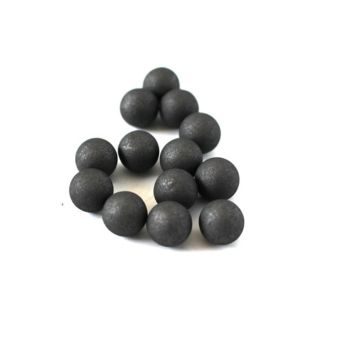
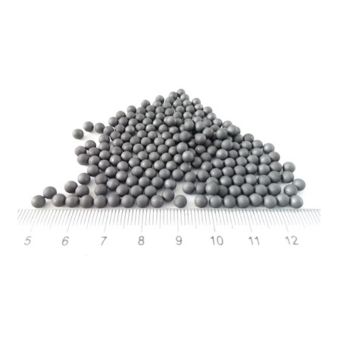
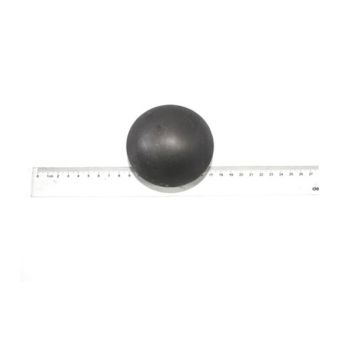
Product Description
Graphite balls are manufactured from high-density or fine-grain graphite through controlled forming and precision machining. The spherical shape ensures uniform stress distribution during operation, while the graphite material provides self-lubricating performance without the need for oils or greases.
Depending on application requirements, graphite balls can be supplied in standard diameters or custom sizes, with controlled surface finish and tight roundness tolerances.
In real industrial use, they are chosen because they keep working when lubrication, heat resistance, or chemical compatibility become limiting factors.
Key Performance Advantages
Self-Lubricating Behavior
Graphite’s layered crystal structure allows easy shear between planes, resulting in naturally low friction. Graphite balls maintain smooth rolling or sealing performance even in dry, dusty, or high-temperature environments.
This makes them ideal where conventional lubricants cannot be used.
High Temperature Resistance
Graphite balls retain structural stability at temperatures exceeding 1,000°C in inert or controlled atmospheres. They do not melt or soften, making them suitable for thermal systems and hot-process equipment.
Excellent Chemical Stability
Graphite is resistant to most acids, alkalis, solvents, and process gases. This allows graphite balls to perform reliably in corrosive environments where metal balls would corrode or contaminate the system.
Uniform Load Distribution
The spherical shape distributes contact stress evenly, reducing localized wear. Combined with dense graphite grades, this helps extend service life under repeated contact or rotational movement.
Typical Applications
Valves and Flow Control Systems
Used as valve balls or sealing elements in high-temperature or corrosive media handling.
Mechanical Seals and Bearings
Applied where dry running or minimal lubrication is required.
High-Temperature Equipment
Used in furnaces, thermal processing systems, and hot gas handling components.
Chemical Processing
Suitable for aggressive chemical environments requiring non-metallic contact components.
Laboratory and Specialized Machinery
Used in custom assemblies where standard metal balls are not suitable.
Material and Grade Options
Graphite balls can be produced from:
Standard high-density graphite for general use
Fine-grain graphite for improved surface finish
Isostatic graphite for higher uniformity and strength
High-purity graphite for contamination-sensitive environments
Selecting the correct grade usually has a greater impact on performance than increasing ball diameter.
Size and Tolerance Options
Graphite balls are available in:
Standard diameters
Custom diameters on request
Controlled roundness and surface finish
Machining tolerances can be adjusted depending on whether the ball is used for sealing, rolling, or positioning.
Handling and Usage Notes
To maintain performance:
Avoid impact during handling, especially when cold
Ensure proper alignment in housings or seats
Clean gently if exposed to process residue
Store in dry conditions before installation
Graphite performs extremely well under heat but remains brittle under mechanical shock—this is often underestimated.