
Graphite box

A graphite box is a high-temperature containment and support component used for holding, shielding, and transporting materials during thermal processing. In furnace operations where temperature stability, atmosphere control, and material cleanliness are critical, graphite boxes provide a reliable and flexible solution that outperforms most metallic or ceramic alternatives.

Product Description
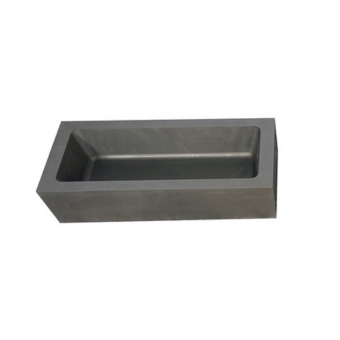
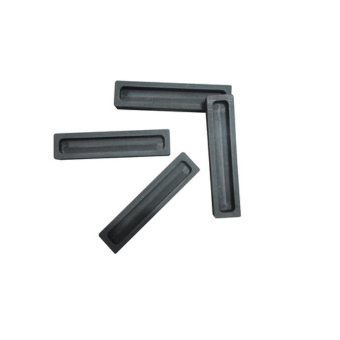
Graphite boxes are manufactured from high-density graphite or fine-grain graphite through precision machining and high-temperature graphitization. They are typically designed as open or lidded rectangular containers, with dimensions and wall thickness customized to suit specific furnace chambers and process requirements.
Unlike simple trays or plates, a graphite box creates a controlled micro-environment for parts, powders, or components during heating. This added protection often improves yield and process consistency, especially in vacuum and inert-gas systems.
Key Performance Advantages
Excellent High-Temperature Stability
Graphite boxes maintain structural integrity at temperatures exceeding 1,000–2,000°C in vacuum or inert atmospheres. They do not melt, soften, or creep under prolonged heat exposure, ensuring consistent geometry over multiple thermal cycles.
This stability is essential when precise part positioning must be maintained.
Superior Thermal Shock Resistance
Modern furnaces often use rapid heating and cooling profiles. Graphite’s low thermal expansion allows graphite boxes to tolerate these temperature changes without cracking or warping, unlike many ceramic containers.
Clean and Non-Reactive Behavior
Graphite is chemically inert to most metals, ceramics, powders, and advanced materials. This minimizes contamination and unwanted reactions during sintering, heat treatment, or material synthesis.
Actually, for high-value or functional materials, contamination control is often the primary reason graphite boxes are chosen.
Uniform Heat Distribution
Graphite’s good thermal conductivity helps distribute heat evenly within the box. This promotes uniform processing conditions, reducing temperature gradients that can cause deformation, incomplete sintering, or inconsistent material properties.
Typical Applications
Vacuum and Inert-Gas Furnaces
Used to hold parts or powders during sintering, brazing, and heat treatment.
Powder Metallurgy and Advanced Ceramics
Applied as containers for compacts and formed parts during high-temperature processing.
Battery and Energy Materials
Used in thermal treatment of cathode, anode, and functional powders.
Semiconductor and Electronic Materials
Suitable for clean, high-purity processing where atmosphere control is critical.
Laboratory and Pilot-Scale Furnaces
Common in R&D environments for controlled and repeatable thermal cycles.
Design and Customization Options
Box Structure
Graphite boxes can be supplied as:
Open-top boxes
Boxes with matching graphite lids
Multi-compartment designs
Custom internal supports or partitions
Wall thickness and reinforcement are optimized to balance strength, weight, and thermal performance.
Graphite Grade Selection
Depending on operating conditions, customers may select:
Molded graphite for cost-effective general use
Fine-grain graphite for improved surface stability
Isostatic graphite for high uniformity and precision
High-purity graphite for contamination-sensitive processes
Choosing the correct grade usually has a greater impact on service life than increasing wall thickness alone.