
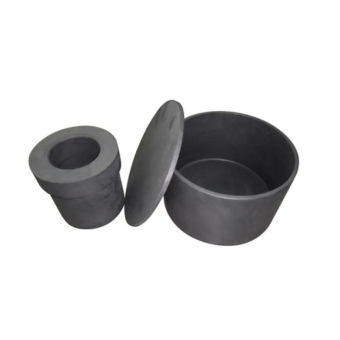
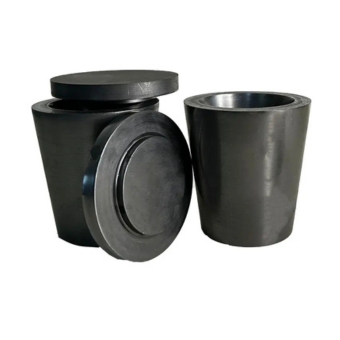
graphite crucible with lid

A graphite crucible with lid is a practical upgrade for melting operations that require better heat retention, reduced oxidation, and improved process control. By integrating a fitted graphite cover, this crucible design helps stabilize the melting environment while protecting both the molten material and the crucible itself.
Product Description
A graphite crucible with lid is manufactured from high-density, fine-grain graphite and supplied with a matching graphite cover designed to sit securely on the crucible opening. Both components are produced through controlled forming and high-temperature graphitization, ensuring consistent material properties and dimensional accuracy.
The lid is not a cosmetic accessory. In real furnace operation, it plays an active role in controlling heat flow, limiting air exposure, and improving overall melting efficiency.

Functional Advantages of the Lid Design
Reduced Oxidation Loss
During melting, exposure to air accelerates oxidation of both molten metal and the crucible wall. A graphite lid acts as a physical barrier, limiting oxygen ingress and helping:
Reduce metal oxidation and dross formation
Slow crucible surface oxidation
Maintain cleaner melt conditions
This is particularly beneficial for aluminum, copper alloys, and precious metals.
Improved Heat Retention and Energy Efficiency
With the lid in place, heat loss from the crucible opening is significantly reduced. This allows:
Faster temperature ramp-up
More stable melt temperature
Lower overall energy consumption
In small and medium furnaces, the difference is noticeable over repeated cycles.
Better Melt Cleanliness
The lid helps prevent dust, debris, and furnace residue from entering the molten material. For applications where surface quality or purity matters, this added protection improves final product consistency.
Actually, many users only realize this benefit after comparing pours with and without a lid.
Material Performance
High Thermal Shock Resistance
Both crucible and lid are made from graphite with low thermal expansion, allowing them to withstand rapid heating and cooling without cracking. This is essential for batch melting and frequent start-stop operations.
Chemical Stability
Graphite remains stable in contact with most non-ferrous molten metals and commonly used fluxes. The lid does not introduce contamination and maintains integrity at operating temperatures.
Mechanical Strength at Temperature
Properly designed lids maintain sufficient strength at elevated temperatures and resist warping, ensuring they continue to fit correctly over multiple melting cycles.
Typical Applications
Precious Metal Melting
Used for gold, silver, and platinum melting where oxidation control and metal recovery are critical.
Aluminum and Copper Alloy Melting
Helps reduce dross formation and improve melt efficiency in foundries and recycling operations.
Laboratory and Small Furnaces
Provides controlled melting conditions for R&D, testing, and pilot-scale production.
Induction, Gas, and Electric Furnaces
Compatible with most furnace types when properly sized.
Standard Specifications (Buyer-Focused)
Size and Capacity
Graphite crucibles with lids are available in a wide range of standard sizes, typically specified by:
Crucible capacity (grams or kilograms)
Inner / outer diameter
Height and wall thickness
The lid is matched to the crucible size to ensure proper coverage without restricting charging or pouring.
Material Grade Options
Depending on application needs, buyers may choose:
Standard graphite for general melting
Fine-grain graphite for longer service life
High-purity graphite for sensitive or high-value metals
Some suppliers, including Gotrays, offer crucible-and-lid sets as matched pairs to ensure consistent fit and performance.
Usage and Handling Recommendations
To maximize service life:
Preheat crucible and lid gradually before first use
Avoid placing a cold lid on a hot crucible
Remove the lid carefully during pouring to prevent impact
Allow both components to cool slowly after use
Improper lid handling is one of the more common causes of chipping—not material failure.
Packaging and Logistics
Crucibles and lids are typically packed together with protective cushioning to prevent damage during transport. Moisture-resistant packaging is used for shipping, and dry storage is recommended prior to use.