
Graphite die mold

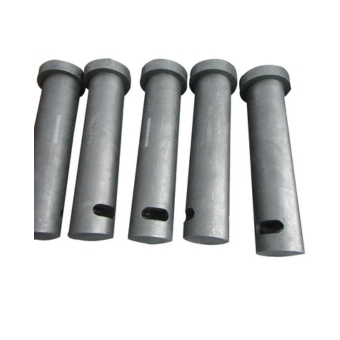
A graphite die mold is a high-temperature tooling component engineered for pressing, forming, and shaping materials under heat and pressure, where dimensional stability and release performance are critical. It is widely used in metallurgical, ceramic, and advanced materials processing, especially in environments where metal dies or ceramic tools struggle with thermal fatigue or sticking.


Product Description
Graphite die molds are manufactured from high-density, fine-grain graphite or isostatic graphite through precision CNC machining. The die geometry—cavities, punches, and mating surfaces—is customized according to the forming process and product design.
Unlike conventional dies that rely on hardness, graphite die molds rely on thermal stability, self-lubrication, and chemical inertness. This makes them particularly effective in hot pressing, sintering, and pressure-assisted forming processes.
In real production, they are chosen not because they are the hardest option, but because they remain predictable at temperature.
Key Performance Advantages
Excellent High-Temperature Stability
Graphite maintains structural integrity at temperatures above 1,000°C, and even higher in inert or vacuum atmospheres. The die retains its shape during repeated thermal cycles, which helps maintain dimensional consistency of the formed parts.
This stability is especially important for precision components produced over multiple cycles.
Natural Self-Lubrication
Graphite’s layered crystal structure provides inherent lubricity. During pressing or forming, this reduces friction between the die and the workpiece, improving material flow and easing demolding.
Actually, many users find they can reduce or eliminate external release agents.
Strong Thermal Shock Resistance
Rapid heating and cooling are common in hot pressing and sintering. Graphite’s low thermal expansion coefficient allows the die mold to tolerate these changes without cracking or warping.
Good Chemical Compatibility
Graphite resists reaction with most metals, ceramics, powders, and process gases. This minimizes contamination and makes it suitable for high-purity or specialty material production.
Typical Applications
Hot Pressing and Sintering
Used for forming ceramics, carbides, composites, and advanced functional materials under heat and pressure.
Powder Metallurgy
Applied in compacting and shaping metal powders before or during sintering.
Metal and Alloy Forming
Used for shaping non-ferrous metals and specialty alloys at elevated temperatures.
Advanced Materials and R&D
Common in laboratory and pilot-scale production where flexibility and precision are required.
Die Design and Material Options
Geometry and Structure
Graphite die molds can be supplied as:
Single-piece dies
Multi-part die and punch assemblies
Complex cavity designs with tight tolerances
Design often balances strength, heat flow, and ease of machining rather than maximizing mass.
Graphite Grade Selection
Depending on temperature, pressure, and atmosphere, customers may choose:
Molded graphite for cost-effective applications
Fine-grain graphite for better surface finish
Isostatic graphite for high uniformity and strength
High-purity graphite for contamination-sensitive processes
Selecting the right grade often has more impact on service life than simply increasing die thickness.
Service Life Considerations
The lifespan of a graphite die mold depends on:
Maximum operating temperature
Applied pressure and cycle frequency
Heating and cooling rate
Material being formed
In practice, controlled process parameters usually extend die life more effectively than over-specifying material grade.
Handling and Usage Recommendations
To maximize performance:
Preheat the die gradually before first use
Avoid mechanical impact during handling
Ensure proper alignment during assembly
Clean gently between cycles without abrasive tools
Graphite performs extremely well under heat but remains brittle under impact when cold—this catches new users off guard occasionally.