
Graphite foil

A graphite foil is a thin, flexible carbon material designed for high-temperature sealing, thermal management, and chemical resistance in demanding industrial environments. Its appeal is straightforward: it performs reliably where elastomers fail, metals creep, and conventional gaskets degrade.
Product Description
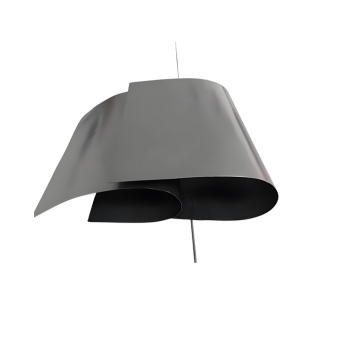
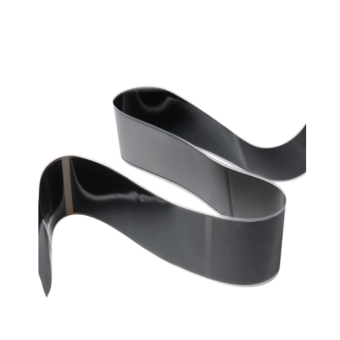
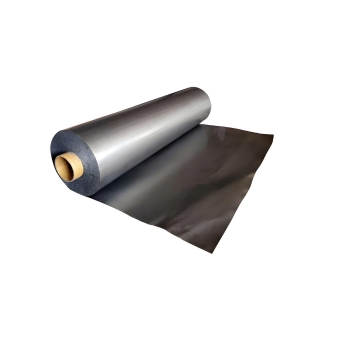
Graphite foil is produced by exfoliating high-purity natural graphite and compressing it into thin sheets without binders or additives. This process preserves graphite’s layered crystal structure while creating a flexible, conformable foil that can be cut, layered, or laminated as needed.
Unlike rigid graphite sheets, graphite foil combines chemical stability with mechanical flexibility. In real applications, this means easier installation, better surface conformity, and more reliable sealing under load.
Key Performance Advantages
Excellent High-Temperature Resistance
Graphite foil remains stable at temperatures above 2,000°C in vacuum or inert atmospheres. It does not melt, harden, or lose sealing capability under prolonged heat exposure.
In oxidizing environments, it still outperforms most polymer-based materials by a wide margin.
Outstanding Sealing Performance
The compressibility and flexibility of graphite foil allow it to conform to flange irregularities and surface imperfections. This makes it highly effective as a sealing material in:
High-temperature piping
Valves and flanges
Vacuum systems
Actually, many leaks traced to “installation issues” disappear once graphite foil is used instead of rigid gaskets.
Chemical and Corrosion Resistance
Graphite foil is resistant to most acids, alkalis, solvents, and process gases. It does not swell, embrittle, or chemically react in aggressive media, supporting long-term sealing performance.
Thermal and Electrical Conductivity
Graphite foil conducts heat and electricity along the plane of the sheet. This allows it to function not only as a gasket, but also as:
A heat spreader
An electrical contact layer
A thermal interface material
Typical Applications
Sealing and Gasketing
Used as flat gaskets, die-cut gaskets, or spiral-wound gasket filler material in high-temperature and high-pressure systems.
Industrial Furnaces
Applied as sealing layers, thermal barriers, or expansion compensation material in vacuum and inert-gas furnaces.
Chemical Processing Equipment
Used in reactors, pumps, and pipe connections exposed to corrosive media.
Electrochemical and Energy Systems
Used as conductive sealing layers or interface materials.
Layered Insulation Systems
Often combined with graphite felt or rigid carbon board to improve sealing and thermal efficiency.
Material Forms and Options
Graphite foil is commonly supplied as:
Rolls
Sheets
Die-cut gaskets
Laminated or reinforced foil (with metal mesh or film, if required)
Thickness can range from very thin foil to multi-layer laminated structures, depending on sealing and mechanical requirements.
Installation and Handling Notes
For best results:
Ensure clean, flat sealing surfaces
Apply uniform compression during installation
Avoid tearing thin foil during handling
Store in dry conditions prior to use
Actually, graphite foil tolerates compression extremely well—but edge damage during installation is the most common cause of failure.