
Graphite mold for glass

A graphite mold for glass is a high-temperature forming tool designed for precision shaping, stable thermal performance, and clean surface quality in glass processing. When working with molten or softened glass—where temperature control, release behavior, and dimensional stability are critical—graphite molds offer advantages that metal and ceramic molds often cannot match.
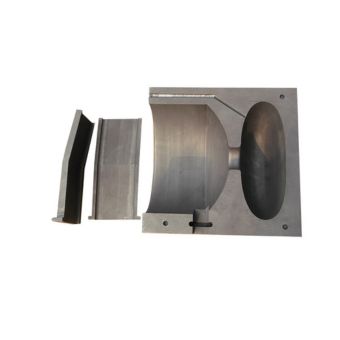
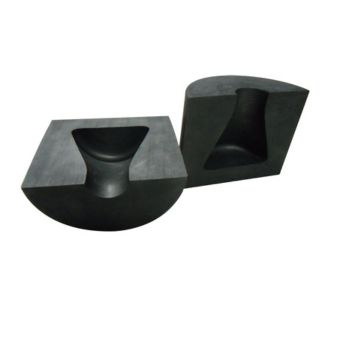
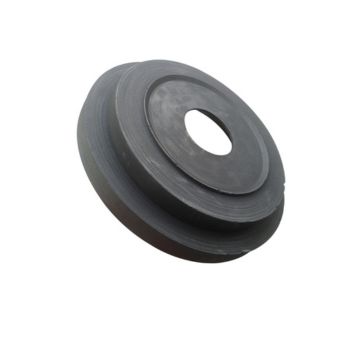
Product Description
Graphite molds for glass are manufactured from high-density or fine-grain graphite materials through precision CNC machining. The mold cavity is customized according to the glass shape, thickness, and forming method, ensuring accurate geometry and repeatable results.
Glass forming temperatures typically range from 800°C to 1,600°C, depending on composition. Within this range, graphite maintains structural stability and resists deformation, making it suitable for both batch and repeated-use processes.
Unlike metallic molds, graphite does not rely on surface coatings to perform effectively. Its material properties do most of the work.
Why Graphite Works Well for Glass
Excellent Thermal Stability
Graphite maintains strength and dimensional accuracy at elevated temperatures, especially in controlled or inert atmospheres. This stability allows consistent mold geometry throughout heating and cooling cycles, which is essential for precision glass parts.
Superior Thermal Shock Resistance
Glass processing often involves rapid temperature changes. Graphite’s low thermal expansion coefficient allows it to withstand sudden heating or cooling without cracking—an issue that commonly limits ceramic mold lifespan.
Natural Release Performance
Molten or softened glass releases easily from graphite surfaces due to low wettability. This reduces sticking, surface tearing, and the need for aggressive release agents.
Actually, many users find that graphite molds significantly improve surface finish consistency.
Chemical Compatibility
Graphite shows good resistance to most glass compositions, including borosilicate and specialty technical glasses. It minimizes chemical interaction and helps avoid unwanted inclusions or discoloration.
Typical Applications
Glass Forming and Shaping
Used for pressing, molding, or shaping specialty glass components.
Optical and Technical Glass
Applied in forming lenses, plates, and functional glass parts where surface quality and dimensional accuracy matter.
Laboratory and R&D Use
Ideal for small-batch experiments, new glass formulation testing, and pilot production.
Quartz and Specialty Silica Processing
Used in controlled environments where high temperature resistance and purity are required.
Mold Design and Customization
Mold Geometry Options
Graphite molds for glass can be produced as:
Single-cavity or multi-cavity molds
Open molds or matched upper/lower mold sets
Flat, curved, or complex 3D cavity designs
Surface finish and corner radii can be optimized to balance glass flow and demolding ease.
Graphite Grade Selection
Depending on operating conditions, customers may choose:
Standard high-density graphite for general glass forming
Fine-grain graphite for improved surface finish
High-purity graphite for optical or contamination-sensitive applications
Suppliers such as Gotrays often assist in matching graphite grade to temperature, glass type, and expected cycle count, helping avoid unnecessary over-specification.
Service Life Factors
The lifespan of a graphite mold for glass depends on:
Maximum forming temperature
Heating and cooling rate
Glass composition and viscosity
Mechanical handling and alignment
In practice, controlled preheating and gradual cooling often extend mold life more effectively than increasing wall thickness alone.
Handling and Usage Recommendations
To achieve optimal performance:
Preheat molds gradually before first use
Avoid direct flame or heater contact on a single area
Handle carefully to prevent edge chipping
Clean gently between cycles without abrasive tools
Graphite performs extremely well at temperature but remains sensitive to impact when cold.