
Graphite sagger

A graphite sagger is a high-temperature container designed to hold, protect, and separate materials during firing, sintering, or heat treatment. In processes where temperature uniformity, atmosphere control, and material cleanliness are critical, the sagger becomes more than a carrier—it directly influences yield and consistency.

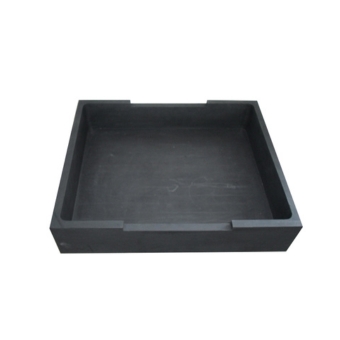
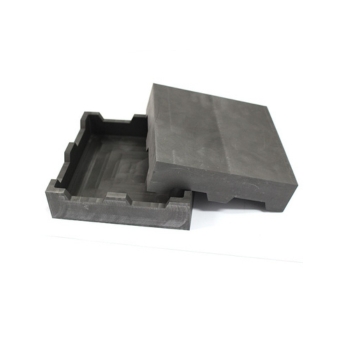
Product Description
Graphite saggers are manufactured from high-density or fine-grain graphite through precision machining and high-temperature graphitization. The sagger structure—typically a box, tray, or crucible-like form—is customized to match furnace size, product geometry, and process requirements.
Compared with ceramic saggers, graphite saggers offer superior thermal shock resistance and longer service life in controlled atmospheres. They are widely used in vacuum, inert gas, and reducing environments, where graphite’s stability becomes a clear advantage.
In actual production, saggers are often selected not just for holding parts, but for stabilizing the entire thermal process.
Key Performance Advantages
Excellent High-Temperature Stability
Graphite saggers remain structurally stable at temperatures exceeding 1,000–2,000°C in vacuum or inert atmospheres. They do not soften or deform under prolonged heat exposure, helping maintain consistent part positioning throughout firing cycles.
Strong Thermal Shock Resistance
Rapid heating and cooling are common in modern furnaces. Graphite’s low thermal expansion allows saggers to withstand aggressive temperature ramps without cracking—something that limits the lifespan of many ceramic alternatives.
Clean and Non-Reactive Behavior
Graphite shows low reactivity with most metals, ceramics, powders, and advanced materials. This minimizes contamination and unwanted reactions during sintering or heat treatment.
Actually, for high-value parts, contamination risk is often the deciding factor in choosing a graphite sagger.
Uniform Heat Distribution
Graphite’s thermal conductivity helps distribute heat evenly inside the sagger. This promotes uniform sintering or firing, reducing deformation, uneven grain growth, or local overheating.
Typical Applications
Powder Metallurgy and Sintering
Used to hold metal powders, compacts, and formed parts during sintering and hot processing.
Advanced Ceramics Processing
Applied in firing technical ceramics and functional materials under controlled atmospheres.
Battery and Energy Materials
Used in thermal treatment of electrode materials and energy-related powders.
Semiconductor and Electronic Materials
Suitable for high-purity processing where material stability and repeatability are required.
Laboratory and Pilot Furnaces
Commonly used in R&D environments for controlled and repeatable heat treatment.
Design and Material Options
Sagger Geometry
Graphite saggers can be produced as:
Open trays
Covered boxes
Multi-compartment designs
Custom shapes based on part layout
Wall thickness and internal structure are optimized to balance strength, weight, and heat flow.
Graphite Grade Selection
Depending on temperature, load, and atmosphere, customers may choose:
Molded graphite for cost-effective applications
Fine-grain graphite for better surface stability
Isostatic graphite for high uniformity and precision
High-purity graphite for contamination-sensitive processes
Selecting the right grade usually extends service life more effectively than simply increasing thickness.
Service Life Considerations
Sagger lifespan depends on:
Maximum operating temperature
Heating and cooling rate
Load weight and distribution
Furnace atmosphere and oxygen exposure
In practice, controlled preheating and gradual cooling often double usable life compared with aggressive cycling.
Handling and Usage Recommendations
To maximize performance:
Preheat saggers before first use
Avoid mechanical impact and stacking damage
Load parts evenly to prevent stress concentration
Clean gently between cycles
Graphite handles heat extremely well but remains sensitive to mechanical shock when cold—this is frequently underestimated.
Packaging and Logistics
Graphite saggers are packed individually with protective materials to prevent chipping and cracking during transport. Moisture-resistant packaging is standard, and dry storage is recommended before use.