
Graphite tube

A graphite tube is a cylindrical carbon component engineered for high-temperature service, chemical resistance, and stable structural performance across a wide range of industrial processes. It is commonly used where metals soften, corrode, or contaminate the process, and where dimensional reliability under heat is more important than raw mechanical strength.
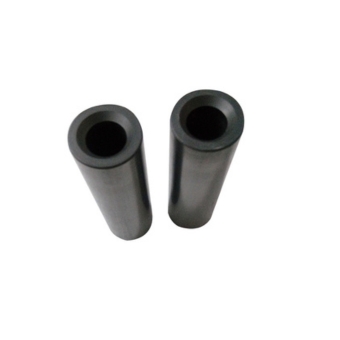
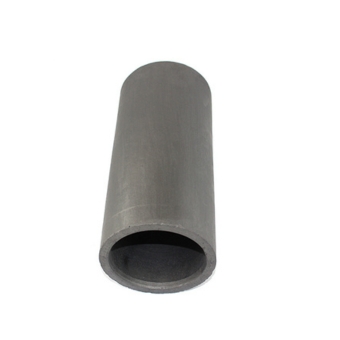
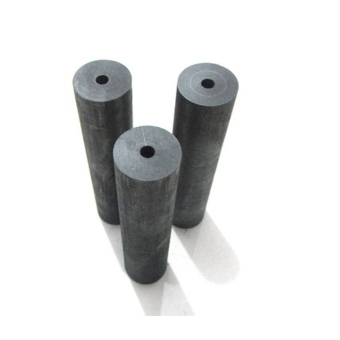
Product Description
Graphite tubes are manufactured from high-density graphite materials using molding, extrusion, or isostatic pressing, followed by high-temperature graphitization. Depending on application requirements, the tube can be supplied as a raw blank or precision-machined to tight tolerances.
Thanks to graphite’s inherent properties—thermal stability, electrical conductivity, and chemical inertness—graphite tubes perform reliably in environments involving extreme heat, corrosive media, or electrical current.
In real-world operation, they are often chosen because they fail predictably and slowly, rather than suddenly.
Key Material Advantages
Excellent High-Temperature Resistance
Graphite tubes maintain structural integrity at temperatures above 2,000°C in inert or vacuum atmospheres. They do not melt and exhibit low thermal expansion, making them suitable for continuous thermal cycling.
For furnace components, this stability directly translates into longer service intervals.
Strong Thermal Shock Resistance
Rapid heating and cooling are common in industrial furnaces and thermal systems. Graphite’s low coefficient of thermal expansion allows tubes to tolerate sudden temperature changes without cracking—an advantage over many ceramics.
Chemical Inertness
Graphite resists most acids, alkalis, molten salts, and process gases. This makes graphite tubes suitable for chemically aggressive environments where metal tubes would corrode or contaminate the process.
Actually, chemical attack is often the limiting factor for tube materials, not temperature.
Electrical and Thermal Conductivity
Depending on grade, graphite tubes offer stable electrical conductivity, making them suitable for:
Heating elements
Electrodes
Current-carrying sleeves
Thermal conductivity helps distribute heat evenly along the tube wall, reducing localized stress.
Common Applications
Industrial Furnaces
Used as protection tubes, heating element supports, and structural components in vacuum or inert-gas furnaces.
Semiconductor and Electronics Processing
Applied as process tubes, carriers, or shielding components where purity and thermal stability are required.
Chemical Processing Equipment
Used as liners, reaction tubes, or transfer components in corrosive environments.
Metallurgical Applications
Used in molten metal handling, thermocouple protection, and casting-related processes.
Laboratory and R&D Equipment
Preferred for experimental setups requiring stable behavior at elevated temperatures.
Standard Specifications (Buyer-Oriented)
Dimensions
Graphite tubes are typically supplied with:
Outer diameter: customizable
Inner diameter: customizable
Length: standard or cut-to-size
Wall thickness is selected based on temperature, mechanical load, and handling requirements.
Material Grade Options
Depending on operating conditions, buyers may choose:
Molded graphite for cost-effective applications
Extruded graphite for longer tube lengths
Isostatic graphite for higher uniformity and strength
High-purity graphite for contamination-sensitive processes
Grade selection usually has more impact on service life than increasing wall thickness.
Machining and Customization
Graphite tubes can be supplied with:
Precision-cut ends
Grooves, slots, or holes
Tight concentricity and straightness tolerances
CNC machining allows adaptation to specific system designs without long tooling lead times.
Handling and Usage Considerations
To maximize tube lifespan:
Preheat gradually before first high-temperature use
Avoid mechanical impact, especially when cold
Support evenly to prevent bending stress
Store in dry conditions prior to installation
Graphite performs extremely well under heat but remains brittle under impact—this catches new users occasionally.