
Rayon graphite felt

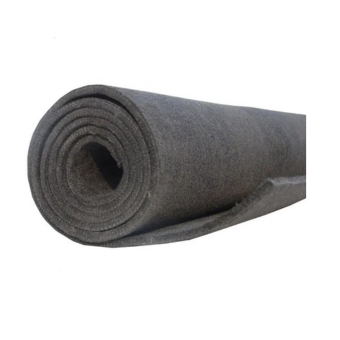
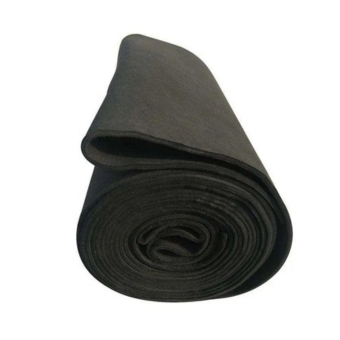
Rayon graphite felt is a high-performance carbon insulation material engineered for high-temperature thermal management, chemical stability, and uniform heat distribution. It is widely used in vacuum furnaces, inert-atmosphere systems, and advanced thermal processing equipment where temperature control and cleanliness are critical.

Product Description
Rayon graphite felt is produced by carbonizing and graphitizing rayon-based precursor fibers at high temperatures. Compared with PAN-based carbon felts, rayon-derived graphite felt offers higher purity, better thermal uniformity, and more stable fiber structure at extreme temperatures.
The result is a lightweight, flexible felt with excellent insulation performance and minimal contamination risk, making it a preferred choice for high-end thermal applications.
In real furnace operation, this material is chosen not because it is rigid or structural—but because it quietly stabilizes the entire thermal system.
Key Material Advantages
Excellent High-Temperature Performance
Rayon graphite felt performs reliably at temperatures up to:
2,000°C in vacuum
2,400–2,800°C in inert atmospheres
It maintains structural integrity without melting or releasing contaminants, supporting long-duration high-temperature cycles.
Superior Thermal Insulation
The felt’s porous fiber network traps heat effectively, reducing thermal loss and improving furnace energy efficiency. Low thermal conductivity helps:
Stabilize temperature gradients
Reduce heating power consumption
Improve process repeatability
Actually, insulation quality often matters more than heater power in achieving uniform temperature zones.
High Purity and Low Outgassing
Rayon-based graphite felt is known for:
Very low ash content
Minimal metallic impurities
Low outgassing under vacuum
These properties are especially important in semiconductor processing, crystal growth, and advanced materials research.
Excellent Chemical Stability
Graphite felt resists most acids, alkalis, and process gases. It does not react with common furnace atmospheres, reducing degradation and contamination over time.
Physical Characteristics
Typical features include:
Soft, compressible structure
Uniform fiber distribution
Good resilience after compression
Easy cutting and shaping
The felt conforms easily to furnace interiors, complex geometries, and layered insulation systems.
Common Applications
Vacuum and Inert Gas Furnaces
Used as hot-zone insulation for sintering, brazing, and heat treatment furnaces.
Crystal Growth and Semiconductor Processing
Applied in Czochralski and other crystal growth systems where purity and thermal uniformity are essential.
High-Temperature Heat Treatment
Used in carbonization, graphitization, and advanced materials processing.
Laboratory and R&D Equipment
Preferred for experimental setups requiring clean thermal environments and flexible insulation solutions.
Battery and Advanced Energy Materials
Used in high-temperature processing of electrode and functional materials.