
Synthetic graphite powder

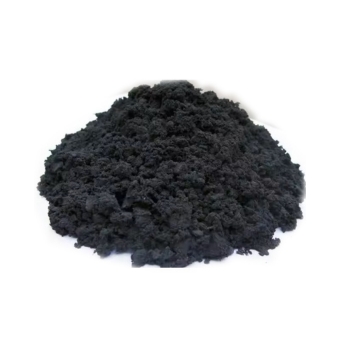
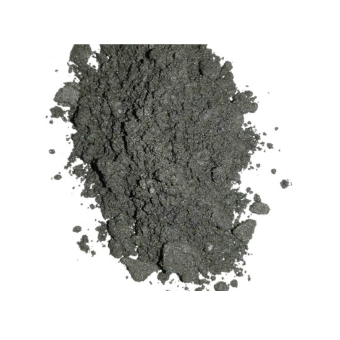
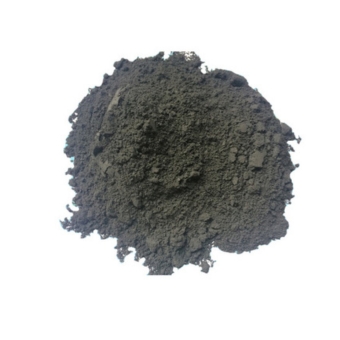
Synthetic graphite powder is an engineered carbon material designed for applications where purity control, consistency, and performance stability are more important than raw mineral origin. Manufactured under tightly controlled industrial conditions, it offers predictable behavior across batches, making it especially suitable for large-scale manufacturing and repeat procurement.
Product Description
Synthetic graphite powder is produced from petroleum coke or needle coke through a sequence of calcination, milling, and high-temperature graphitization, typically above 2,500 °C. This process removes volatile components and most inorganic impurities, resulting in a graphite material with a highly ordered crystal structure.
Unlike natural graphite, synthetic graphite does not depend on geological variability. For buyers, this translates into stable quality, uniform composition, and fewer surprises during long-term production.
Standard Specifications (Buyer-Oriented)
Particle Size Options
Synthetic graphite powder is commonly supplied in:
-200 mesh
-325 mesh
Fine / micronized grades (D50: 5–20 μm)
Particle size can be adjusted based on dispersion and performance requirements.
Typical Technical Parameters
| Property | Typical Range |
|---|---|
| Fixed Carbon | ≥ 98% / ≥ 99% |
| Ash Content | ≤ 0.3–0.5% |
| Moisture | ≤ 0.3% |
| Bulk Density | 0.4–0.9 g/cm³ |
| Electrical Conductivity | Stable, repeatable |
| Origin | Synthetic (petroleum-based) |
Full technical data sheets and COA are available for each grade before order confirmation.
Key Advantages for Industrial Users
High Purity and Low Variability
Synthetic graphite powder offers low impurity levels and minimal batch-to-batch variation. This is critical in applications such as batteries, conductive materials, and powder metallurgy, where even small compositional changes can affect performance.
Controlled Particle Characteristics
Industrial milling and classification allow tighter control over particle size distribution compared with natural graphite. This improves dispersion in polymers, coatings, and metal matrices, reducing segregation or uneven conductivity.
Reliable Electrical and Thermal Performance
The ordered graphite structure provides predictable electrical conductivity and thermal stability. This reliability supports use in conductive additives, electrodes, and thermal management materials.
Strong High-Temperature Stability
Synthetic graphite remains stable under high temperatures in inert or reducing environments. It does not soften or melt, making it suitable for metallurgical and refractory-related applications.
Typical Applications
Battery and Energy Systems
Used as a conductive additive or functional carbon material where purity and consistency are critical for performance and yield.
Powder Metallurgy
Applied as a carbon source or processing aid to achieve controlled carbon content and uniform mixing.
Conductive Polymers and Coatings
Added to plastics, rubbers, and coatings to impart stable conductivity and antistatic properties.
Refractory and High-Temperature Materials
Used to enhance thermal resistance and structural stability in refractory formulations.
Industrial Lubrication (Selected Grades)
Certain synthetic graphite powders are used in dry or solid lubrication systems requiring controlled purity.
Packaging and Logistics
Synthetic graphite powder is supplied in packaging suitable for industrial handling and export:
25 kg bags
500 kg / 1,000 kg jumbo bags
Custom packaging available on request
Moisture-resistant packaging helps preserve flowability and product integrity during transport.